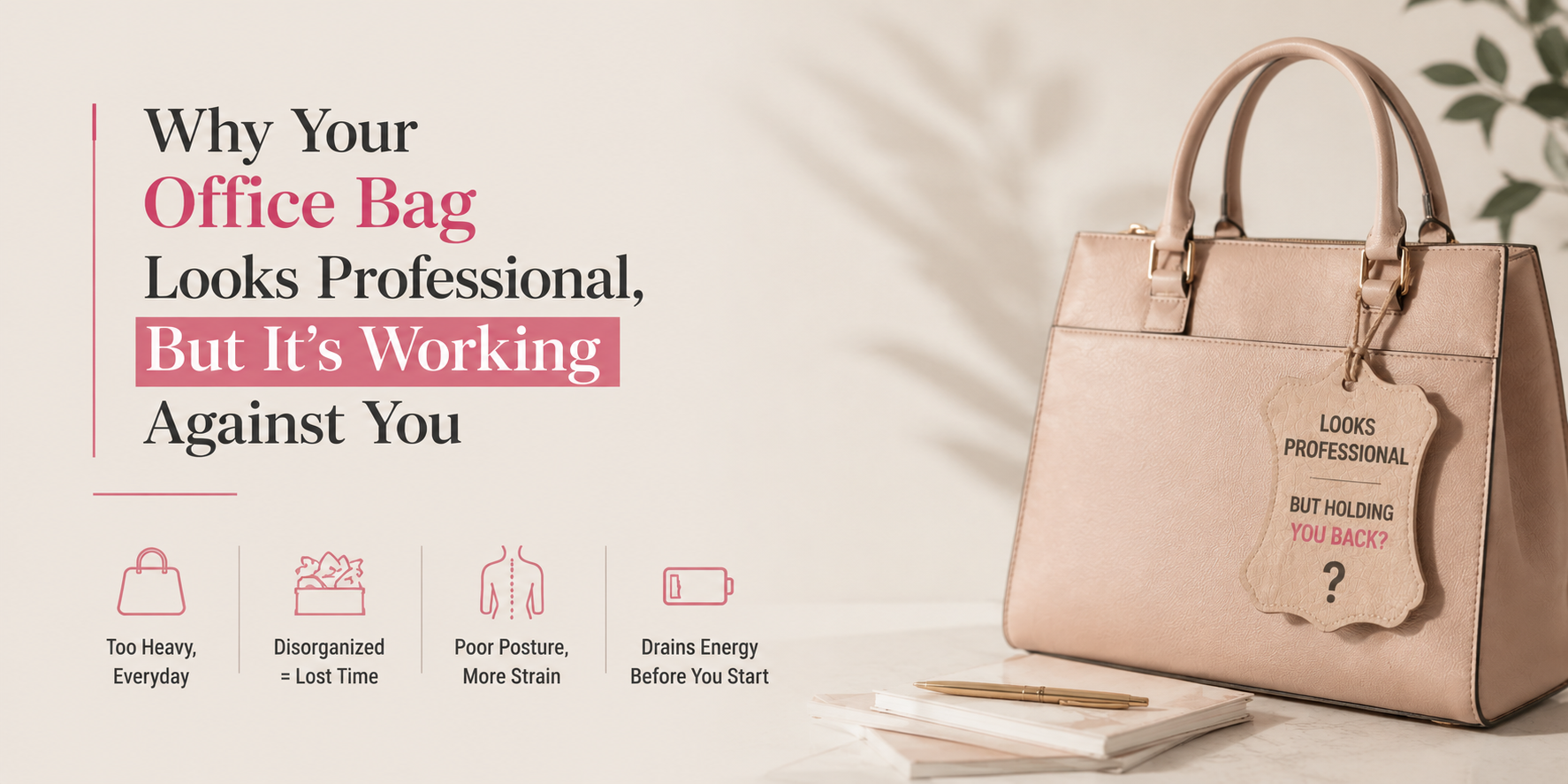
Ask someone what makes a good office bag and they'll usually describe how it looks — structured, neutral, maybe a top-handle. Ask them six months later whether it's actually working for them, and the answer is often a tired shrug and a bag with a permanent dent from being wedged under a desk.
Looking professional and functioning professionally are two different tests. Most office bags pass the first one in the store and fail the second one within a month of daily use.
The Gap Between "Looks Right" and "Works Right"
A bag can nail every visual cue of "professional" — structured silhouette, muted color, clean hardware — and still be a bad office bag if it ignores what actually happens during a workday:
- No dedicated laptop or tablet slot, so devices slide around loose with keys and bottles, picking up scratches.
- A single main compartment, so finding your ID card at a security gate turns into a two-hand excavation.
- A short strap drop or missing crossbody option, which matters more than it sounds like when you're also carrying a coffee, a phone call, and a metro card.
- A base with no feet or structure, so the bag absorbs floor grime every time it's set down between meetings.
None of these show up in a five-second glance at the shape and color. All of them show up by week two of actually using the bag.
What to Actually Check Before Buying a Work Bag
Run any "office bag" candidate through this before you commit:
- Open every compartment and picture what goes where — cards, phone, laptop, a small pouch. If you can't picture it clearly, the bag's organization isn't built for daily use.
- Check the strap drop — a bag that only works handheld will fight you the moment your hands are full.
- Press the base — a flat, semi-rigid base keeps the bag standing and keeps it off dirty floors; a soft base means constant sagging and grime.
- Consider the color against your actual wardrobe rotation, not just what looked sharp under store lighting.
The Bags That Actually Hold Up
The handbags that survive months of daily office use tend to share a specific profile: structured but not stiff, a size that fits a 13–14 inch laptop without bulging, at least two internal compartments, and a strap that adjusts between handheld and crossbody. It's a narrower list than "anything neutral and boxy" — but it's the list that actually matters once the bag leaves the store.
The Uncomfortable Truth
Most office bags are designed to photograph well, not to be lived in. The ones that survive a real workday are designed backward — starting from what a workday actually demands, and making sure the silhouette follows.
Looking for a bag that photographs well and survives Monday to Friday? See Sheshinestreet's work-ready handbags and pick one built for your actual day, not just the store lighting.