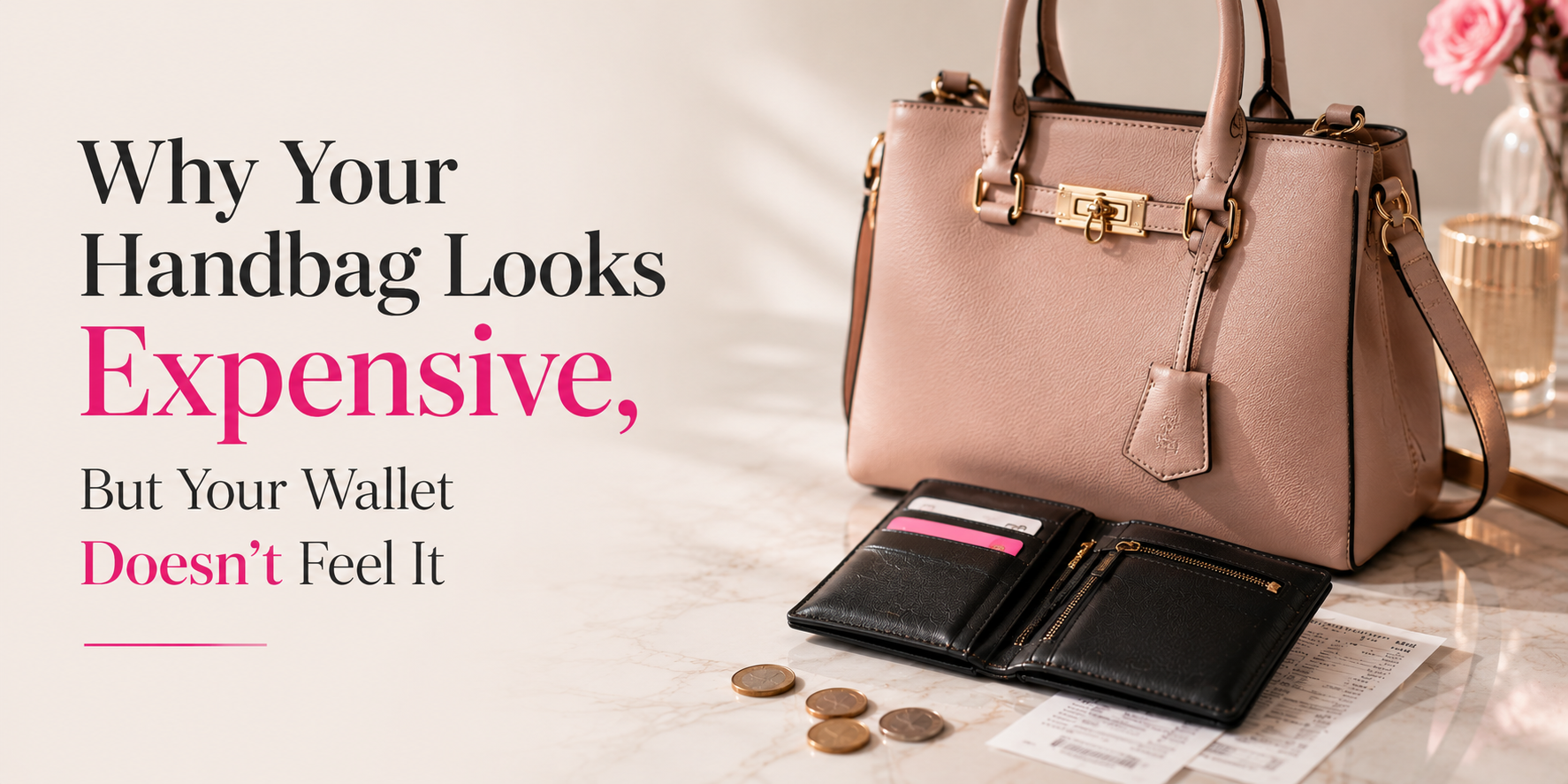
We've had more than one customer message us a photo of a bag they almost bought — "Is this worth ₹8,000?" — and nine times out of ten, the honest answer is no. Not because the bag is fake or badly made. Because the price tag and the bag are answering two different questions, and only one of them is "does this look good?"
Here's the part nobody tells you when you're shopping for a handbag: price and "looking expensive" are not the same variable. One is about brand markup. The other is about design decisions you can actually see and touch — decisions any smart shopper can learn to spot.
What Actually Makes a Bag Look Premium
It's rarely the logo. It's almost never the price sticker. It's usually four things, and they cost the maker very little extra to get right:
- Clean stitching with no visible thread bulk — uneven or loose stitching is the fastest way a bag reads as cheap, regardless of the material underneath.
- Structured shape that holds itself up — a bag that slumps and folds when empty signals low-grade lining, no matter how nice the outer fabric looks.
- Hardware that matches in tone — mismatched gold zippers on silver-toned buckles is a detail most people notice subconsciously, even if they can't name why the bag "feels off."
- A silhouette that isn't trying too hard — the most expensive-looking bags are usually the simplest ones. Over-designed bags with too many embellishments almost always read as budget, not luxury.
None of these require a designer price tag. They require the maker to actually care about the finish — which, frankly, most mass-market "affordable" brands don't.
Where "Affordable" Handbags Usually Go Wrong
This is the gap we built Sheshinestreet around. Most budget handbag lines cut corners in exactly the places a shopper can see:
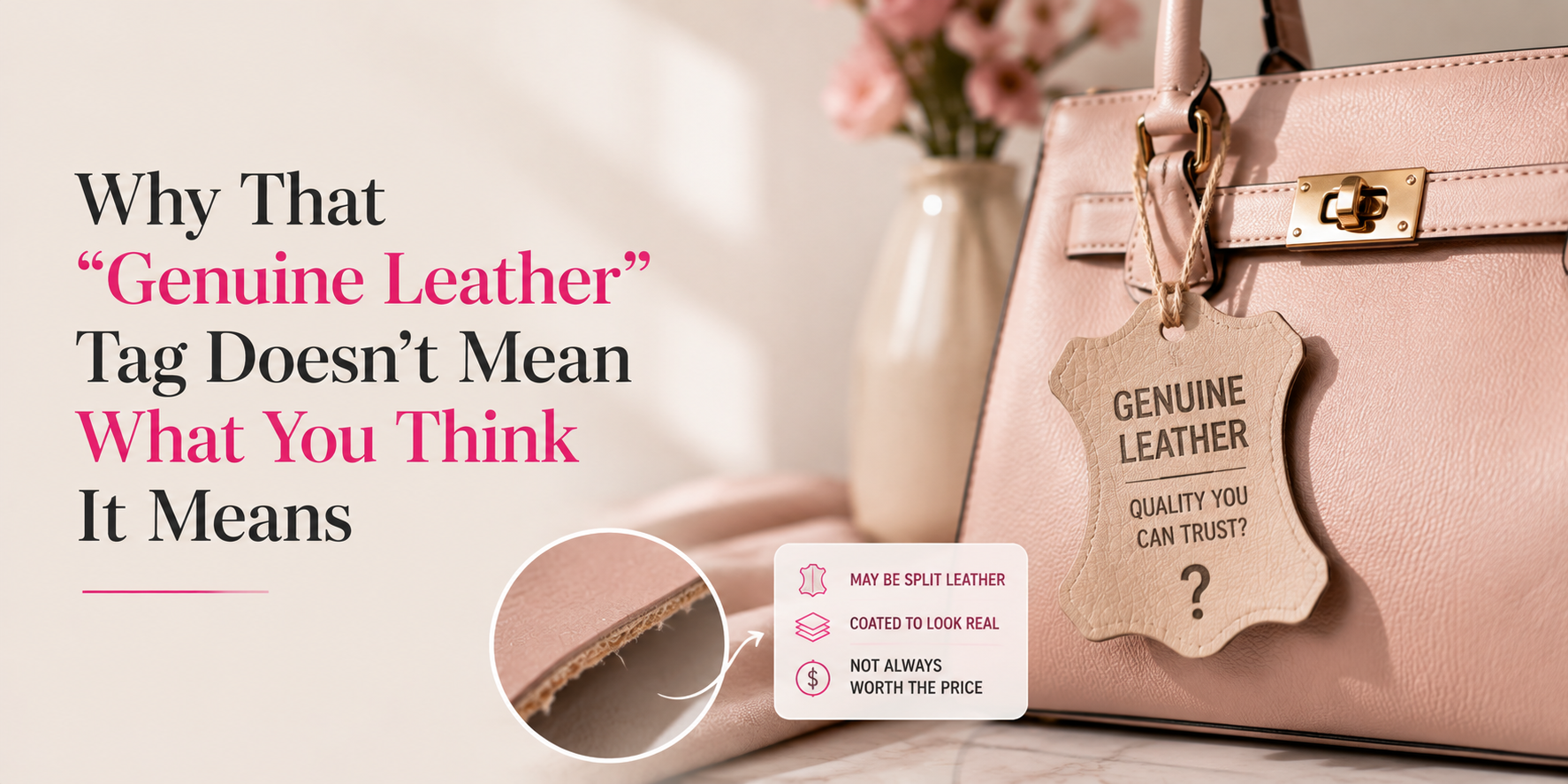
- Using a synthetic material that's shiny in a way real leather (or good vegan leather) never is.
- Skipping interior structure, so the bag looks fine on the hanger and collapses the moment you put your phone and wallet in it.
- Copying the shape of a luxury bag while ignoring the proportions — a slightly-too-small handle or a slightly-too-wide base is enough to make a copy look like a copy.
None of that is really about cost. It's about whether the brand is optimizing for margin or for how the bag actually looks on your shoulder.
The Three Questions to Ask Before You Buy
Before you check out on any handbag — ours or anyone else's — run it through this:
- Does it hold its shape empty? Pick it up, don't fill it. If it flops, the structure is weak.
- Do the zippers and clasps move smoothly? Sticky or scratchy hardware is a preview of how it'll behave in six months.
- Would you still like the shape in two years? Trend-driven silhouettes date fast. Clean, versatile shapes don't.
A bag that passes all three is doing the actual work of looking premium — no matter what it costs.
The Uncomfortable Truth
Most people assume higher price means better quality. It doesn't — it often just means a bigger marketing and retail-rent budget baked into the sticker price. The materials and workmanship underneath can be nearly identical to something priced a third as much.
At Sheshinestreet, that gap is the whole point. We design for the four things that actually read as premium, and price for what the bag costs to make well — not what a logo lets us charge.
Curious what "premium without the premium price tag" actually looks like? Explore the Sheshinestreet collection and see the difference for yourself.