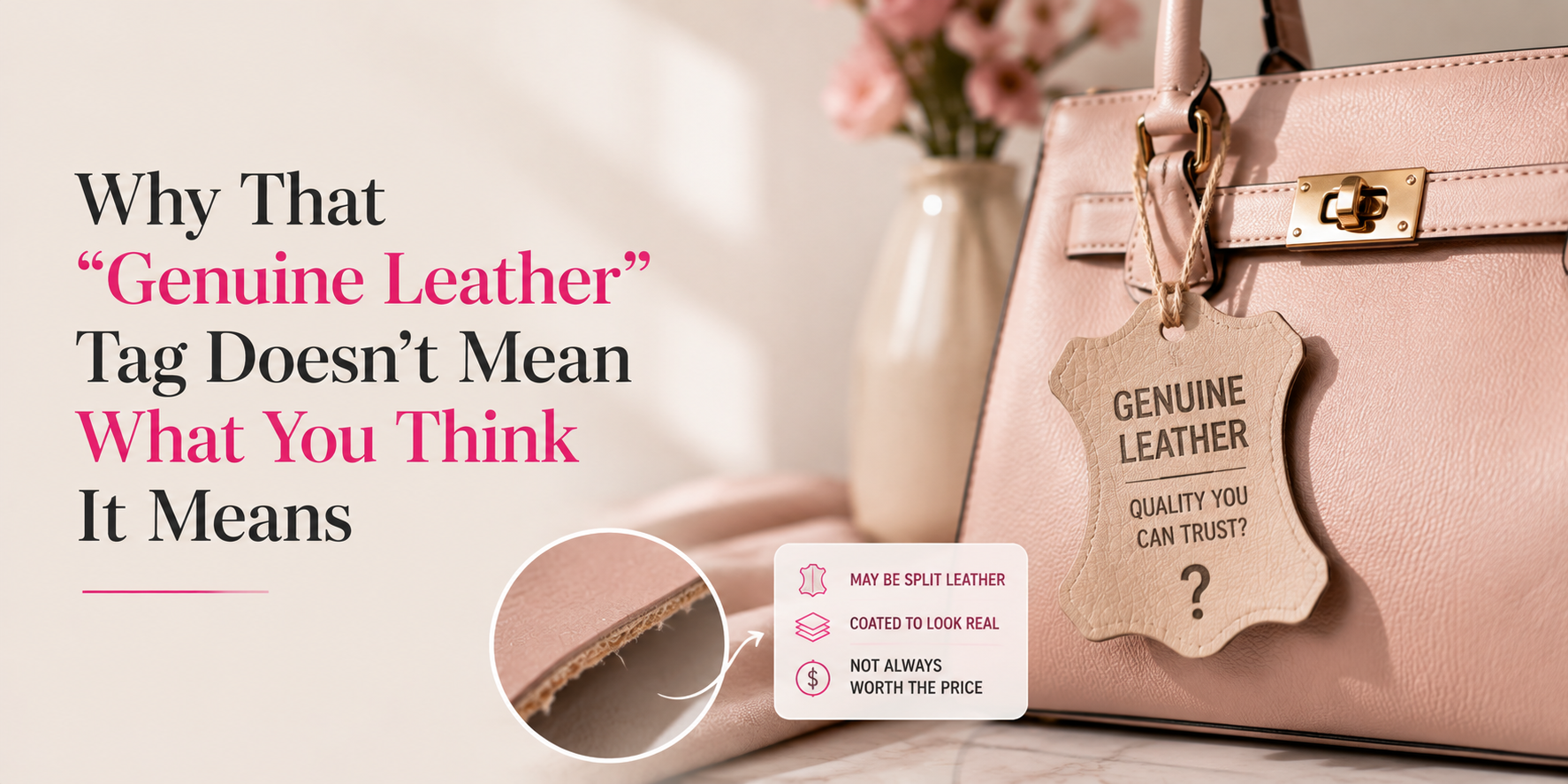
"Genuine leather" is one of the most quietly misleading phrases in the handbag aisle. It sounds like a promise — real, durable, premium. In the industry, it actually means something much less impressive: it's the lowest legally recognized grade of leather, one step above scrap. Full-grain and top-grain leather — the good stuff — are labeled differently, and most shoppers have never been told the difference.
This isn't a materials lecture for its own sake. It's the difference between a bag that ages well for years and one that starts cracking in six months — regardless of what the tag says.
The Leather Grading Nobody Explains at the Counter
Leather isn't one material. It's a spectrum, and where a bag sits on it matters more than whether it's "leather" at all:
- Full-grain leather — the strongest, most durable, develops a patina over time. Rare in affordable handbags because it's expensive to produce.
- Top-grain leather — sanded and treated for a more uniform look, still durable, more common in mid-range bags.
- Genuine leather — the bottom grade, made from leftover layers bonded together. Looks fine on day one, wears unevenly fast.
- Bonded leather — leather scraps and fibers glued into a sheet. Often peels within a year.
A tag that just says "genuine leather" isn't reassuring you about quality. It's often the industry's way of saying "leather, technically" — nothing more.
Where Vegan Leather Actually Fits In
Vegan (or PU/PU-blend) leather gets dismissed as automatically inferior, and that's outdated thinking. Good-quality vegan leather:
- Doesn't crack or peel the way low-grade genuine leather does, because it's engineered rather than assembled from scraps.
- Holds color and shape more consistently across humid or high-heat conditions — a real factor for handbags used daily in Indian weather.
- Costs less to produce well, which means a well-made vegan leather bag can outperform a poorly-made "genuine leather" one at the same price point.
The honest comparison isn't "leather vs. not leather." It's "well-made vs. poorly-made" — and the material label alone won't tell you which one you're holding.
How to Actually Judge Material Quality in Store (or Online)
Skip the label. Check these instead:
- Flex test — gently fold the material. Good material springs back without creasing sharply; poor material shows a permanent crease line immediately.
- Smell — a strong chemical smell usually signals lower-grade PU or bonded leather.
- Edge finish — look at the cut edges of the material. Clean, sealed edges signal a maker who cared about finishing; raw or fraying edges are a red flag regardless of what the tag claims.
The Uncomfortable Truth
"Genuine leather" is a marketing phrase doing the job of a quality guarantee it was never designed to make. The bag underneath could be excellent or mediocre — the tag won't tell you which.
At Sheshinestreet, we'd rather be specific: our vegan leather pieces are chosen for durability and finish, not because "vegan" sounds trendy, but because it consistently outperforms low-grade genuine leather at the same price.
Want to feel the difference between "labeled leather" and material that's actually built to last? Explore Sheshinestreet's handbag materials for yourself.