Choosing the right luggage is an important part of planning a comfortable and enjoyable trip. Whether you are going on a weekend getaway, a family vacation, a business trip, or a long international journey, the right bag helps you organize your belongings and carry essential items conveniently. With so many designs, sizes, materials, and features available, selecting the right option can sometimes be challenging.
Travel Bag and Backpacks are popular choices among travelers because they offer flexibility, storage space, and convenience for different travel needs. From compact backpacks for short trips to spacious travel bags for extended holidays, there are options for almost every type of journey.
In this guide, we will explain how to choose the best travel bag or backpack by considering size, material, comfort, durability, storage capacity, and budget.
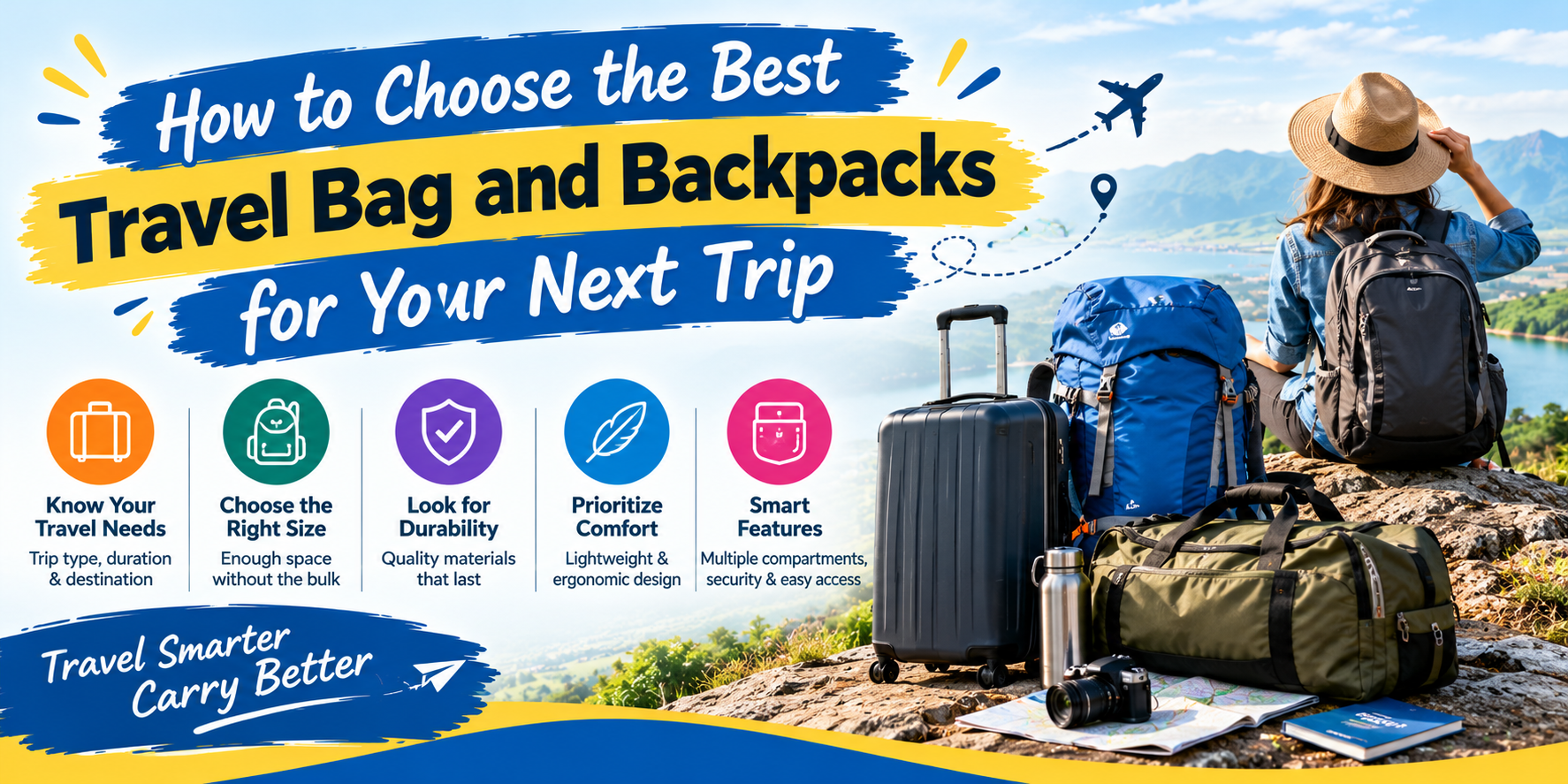
1. Understand Your Travel Requirements
Before purchasing a travel bag or backpack, consider the type of trips you usually take. Your travel habits will help determine the ideal size, style, and features.
For short weekend trips, a compact backpack or duffel bag may provide sufficient space for clothes, toiletries, and personal essentials. For longer vacations, a larger travel bag with multiple compartments may be more suitable.
Business travelers may prefer structured bags with dedicated laptop compartments, document storage, and professional designs. Adventure travelers may benefit from backpacks with padded shoulder straps, adjustable chest straps, and weather-resistant materials.
Understanding your requirements before shopping can help you avoid purchasing a bag that is too small, too heavy, or unsuitable for your journey.
2. Choose the Right Size and Storage Capacity
Size is one of the most important factors when selecting travel luggage. A bag should provide enough room for your belongings without becoming unnecessarily bulky.
Small backpacks are suitable for day trips, sightseeing, and carrying essential items. Medium-sized bags can work well for weekend travel, while larger travel bags are useful for longer holidays and trips requiring additional clothing.
Consider the following points when choosing a size:
-
Trip duration: Longer journeys generally require more storage space.
-
Packing habits: Travelers who pack extra outfits may need larger bags.
-
Transportation: Train, bus, and airline journeys may have different luggage requirements.
-
Personal items: Laptops, cameras, water bottles, and travel documents may need dedicated compartments.
-
Weight restrictions: Airlines may impose cabin baggage and checked baggage limits.
Always check the latest baggage allowance of your airline before traveling with a cabin bag or backpack.
3. Select Durable and High-Quality Materials
The material of a travel bag affects its durability, weight, appearance, and resistance to everyday wear.
Nylon and polyester are common materials used in backpacks and soft-sided travel bags. They are available in different weights and constructions, making them suitable for various budgets and travel styles. Higher-density fabrics and reinforced stitching may improve durability.
Canvas bags offer a classic appearance and can suit casual travel, although their weight and water resistance depend on the material and treatment. Leather travel bags provide a premium look but usually require more maintenance.
When comparing materials, examine the seams, zippers, handles, straps, and base of the bag. Water-resistant fabric can help protect belongings from light moisture, but it does not necessarily make a bag fully waterproof.
Choosing a well-constructed bag can help reduce the need for frequent replacements.
4. Look for Comfortable and Ergonomic Features
Comfort matters when you need to carry your luggage for extended periods. A poorly designed backpack may cause discomfort, especially when it is heavily packed.
Look for padded shoulder straps, breathable back panels, adjustable straps, and a comfortable fit. For heavier loads, a backpack with a supportive hip belt may help distribute weight more effectively.
Travel bags with padded handles and detachable shoulder straps can offer different carrying options. Some larger bags include wheels, allowing you to roll them instead of carrying their entire weight.
Try the bag with some weight inside before purchasing it, if possible. Check whether the straps fit comfortably and whether the bag remains balanced while walking.
5. Check Compartments and Organization
A well-organized bag makes packing and accessing your belongings easier. Multiple compartments help separate clothing, electronics, toiletries, documents, and smaller accessories.
Laptop sleeves are useful for students and business travelers. Front pockets can provide quick access to items such as tickets, chargers, and travel documents. Side pockets may be convenient for water bottles or umbrellas.
Some travel bags also include shoe compartments, laundry sections, compression straps, and internal organizers. These features can be especially useful for travelers who want to keep clean clothes separate from used clothing.
However, more compartments do not automatically mean better functionality. Choose a layout that matches your packing habits and keeps frequently used items easy to reach.
6. Compare Travel Bags and Backpacks
Both options offer advantages, and the right choice depends on your travel plans.
Travel Bags
Travel bags often provide wide openings and spacious interiors, making it easier to pack clothing and larger items. Duffel bags and wheeled travel bags are useful for road trips, family holidays, gym visits, and certain business journeys.
Backpacks
Backpacks allow you to carry belongings on your back while keeping your hands free. They are convenient for walking tours, commuting, short trips, and travel involving multiple transport connections.
Which Option Is Better?
Choose a travel bag if you prioritize a spacious packing area or prefer a traditional luggage format. Choose a backpack if mobility, hands-free carrying, and compact organization are your priorities. Some travelers find that using a backpack alongside a larger travel bag provides the best combination.
7. Consider Security and Weather Protection
Travel security is another important consideration. Look for sturdy zippers, secure compartments, and materials that are difficult to damage during regular use. Lockable zipper pulls may provide an additional layer of convenience, although no bag can guarantee complete security.
For crowded destinations, keep valuables and important documents in secure compartments and remain aware of your surroundings.
Weather protection is also useful when traveling. Water-resistant fabrics, covered zippers, and rain covers can help protect your belongings from unexpected rain. If you carry electronics, consider using a protective sleeve or waterproof pouch where appropriate.
8. Set a Budget and Compare Value
Travel bags and backpacks are available at many price points. Instead of selecting a product based only on its price, compare its construction, material quality, storage capacity, comfort, warranty, and expected use.
A budget-friendly backpack may be suitable for occasional travel, while frequent travelers may prefer a more durable model with improved support and stronger components.
Read customer reviews, compare product specifications, and check the seller's return policy before making a purchase. If you are buying bags for a business or in bulk, also compare minimum order quantities, customization options, and delivery terms.
Tips for Maintaining Your Travel Bag
Proper care can help extend the useful life of your luggage. Empty the bag after every trip and remove dirt according to the manufacturer's cleaning instructions. Allow damp bags to dry completely before storing them.
Avoid overloading zippers and compartments, and check handles and straps periodically for signs of damage. Store bags in a clean, dry location away from prolonged direct sunlight.
Keeping your travel bag clean and organized can also make packing for your next trip faster and more convenient.
Conclusion
Choosing the best travel luggage depends on your destination, trip duration, packing requirements, comfort preferences, and budget. By comparing size, materials, storage features, carrying comfort, security, and durability, you can select an option that suits your travel style.
Travel Bag and Backpacks come in many designs to meet the needs of business travelers, students, families, backpackers, and holidaymakers. Take time to compare features and read product specifications before making your decision. A well-chosen bag can help keep your belongings organized and make your journey more convenient.